
Waves are Everywhere...
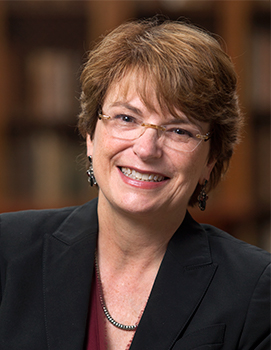
Last month, Brown physics professor and President of the American Physical Society, Brad Marston, delivered a public lecture titled “Waves are Everywhere: How Oscillations Shape Technology, Earth, and the Universe.” He was introduced by 2017 Nobel Laureate Barry Barish at the University of California Riverside Center for Experimental Cosmology and Instrumentation.
I was curious how such a mathematically sophisticated topic could translate to a general audience — including me. My dual allegiance to Brown (AM ’05) and UCR (PhD ’18) tipped the balance, and I made the hour-long drive.
Marston began with waves we encounter as early as elementary school: sound waves, light waves, ripples in water. Waves underlie electricity, magnetism, wireless communication, ocean currents, and even the large-scale circulation of Earth’s atmosphere. He rooted his talk in the work of James Clerk Maxwell.
In the mid-19th century, electricity and magnetism were studied as related but distinct forces, while light belonged to optics. Maxwell showed that oscillating electric and magnetic fields propagate at the speed of light. The implication was profound: light itself is an electromagnetic wave. Electricity, magnetism, and light are not separate phenomena but different expressions of a single underlying structure.

Marston’s lecture extended that spirit of unification. Traditionally, waves are understood through the properties of the medium through which they travel. Sound depends on air’s density and compressibility. Water waves depend on gravity and depth. Light moving through glass depends on refractive index. Adjust the material properties — density, stiffness, composition — and the wave changes accordingly. The medium determines the motion.
Topology offers a different lens. It is the mathematical study of shape and structure at a deep, abstract level, concerned with properties that remain unchanged under smooth deformations — stretching or bending, but not tearing. Rather than focusing on measurements like density, topology emphasizes global features such as connectedness. In recent decades, physicists have discovered that waves themselves can have topological character. In such systems, certain waves exist not because of detailed material properties, but because of the overall mathematical structure of the system. These waves are notably robust: disturb the material slightly, and they persist.
Marston applies this framework to Earth’s climate system. Consider El Niño, the periodic warming of the equatorial Pacific that alters global weather patterns. El Niño dynamics involve large-scale equatorial waves traveling across the Pacific basin. Traditionally, these waves are analyzed in terms of gravity, ocean depth, wind stress, and Earth’s rotation. The topological perspective shifts the level of explanation. Instead of asking which material property generates the wave, it asks whether the structure of the climate system itself requires certain waves to exist.
Here’s my attempt to explain the most complicated part of the lecture. Earth’s rotation deflects motion to the right in the Northern Hemisphere and to the left in the Southern. That deflection changes sign at the equator. Mathematically, this divides the planet into two dynamical regimes. North and south of the equator, large-scale waves obey mirrored but distinct versions of the same governing equations. The equator is where those regimes meet.
When two different dynamical environments must connect, the boundary between them is not neutral. In this case, the connection takes the form of waves confined to the equator. These waves are not produced by a particular value of density or a specific wind pattern. They arise because two opposing rotational systems must be joined consistently. The wave is a consequence of that joining.
On his website, Marston writes that the most important factor in good teaching is the ability to see the world as fresh and new, even when teaching familiar material. A teacher who does so conveys the excitement of discovery by example. In that spirit, he developed a freshman seminar titled Introduction to Environmental Physics: The Quantum Mechanics of Global Warming.
His teaching philosophy was evident in the structure of the talk. Waves, introduced in elementary school, still contain layers of structure waiting to be uncovered. Maxwell unified electricity, magnetism, and light. Topology now reveals deeper structure in waves we thought we understood, with implications for how we study Earth’s climate. Physics advances not only by accumulating new data, but by finding new ways to see what has been there all along. As Augustus De Morgan observed, “The moving power of mathematical invention is not reasoning, but imagination.”
Note: All physics errors are my own ;)

Comments